

 المهندس


What Is a European to US Power Strip and Why Do You Need One?
 2026.06.18
 أخبار الصناعة
A European to US power strip is a device that lets a power strip or extension cord built for European-style sockets (Type C, E, or F) plug safely into an American Type A or Type B outlet, or vice versa. The short answer is this: a simple plug adapter only changes the shape of the connector, it does not convert the electrical voltage, so you still need to check whether your devices can handle both 120V (US) and 230V (Europe) before relying on one. According to the US uses 110-120V at 60Hz, while Europe uses 220-240V at 50Hz, and these variations affect appliance compatibility and the design of power outlets. This article explains exactly how the conversion works, which products are safe to use, and which combinations can damage your electronics or start a fire.
How Does a European to US Power Strip Actually Work?
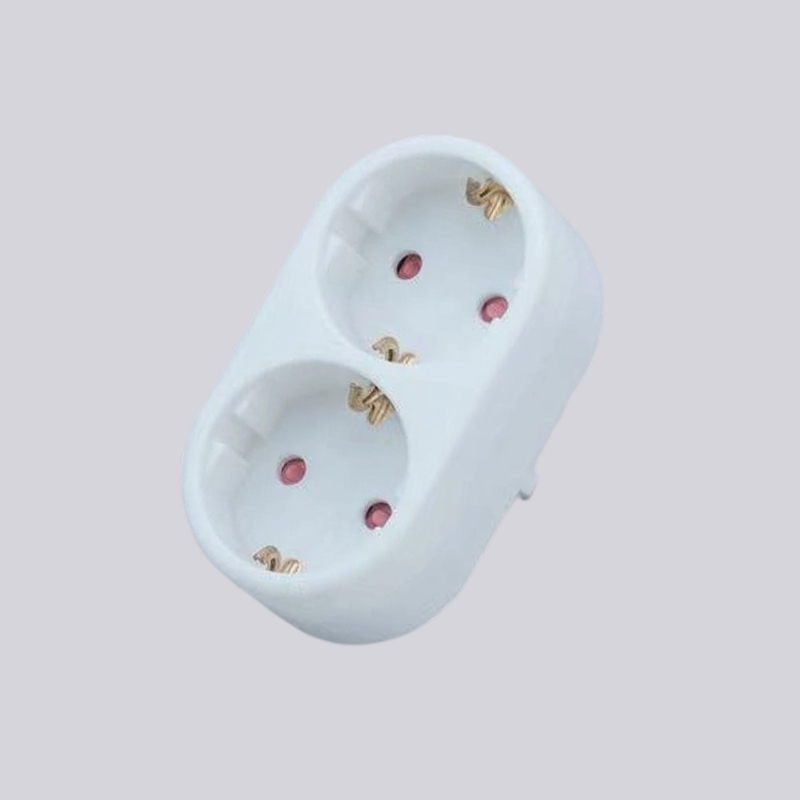
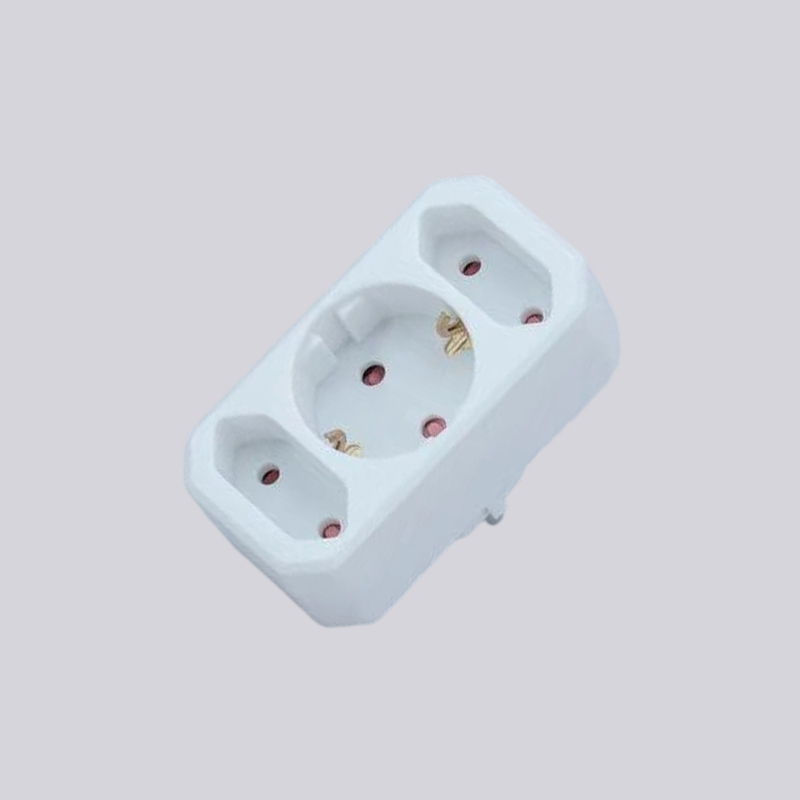
A European to US power strip works by physically reshaping the plug connection while leaving the actual voltage and frequency of the electricity completely unchanged. A US power outlet typically has two vertical slots, often with a small round hole below them for the grounding pin, while European sockets use round pins instead of flat blades. This means the adapter or strip is a mechanical bridge, not an electrical converter. A plug adapter only changes the plug shape—it does not convert voltage, so the responsibility for compatibility shifts entirely to the device being plugged in.
There are two very different categories of product that get casually lumped under "power strip," and confusing them is the single biggest mistake people make:
- Plug-shape adapters: Cheap, lightweight, and only change the physical plug end. They pass through whatever voltage is on the wall.
- Voltage converters/transformers: Heavier, more expensive devices that actually step voltage up or down (e.g., 230V to 120V).
A voltage converter is a more complex electrical tool that is often heavy, and its job is to take the high 230V from a European outlet and lower it to 120V, the voltage a single-voltage American device needs. If your power strip is only a plug adapter, plugging a US-only appliance into it overseas will not protect that appliance at all.
Why Are European and US Outlets So Different?
European and US outlets differ because the two regions standardized their electrical grids independently, at different voltages, for historical and safety reasons. European countries standardized their outlets to support 220-240V systems, while the US adopted a 110-120V standard, influencing power outlet design and functionality, and these differences reflect the distinct technological advancements and safety protocols each region prioritized over time. With the notable exception of North America, premises around the world receive either a three-phase supply or a single-phase supply derived from a three-phase system, while North America is instead served by a unique split-phase connection providing either 120 or 240V at 60Hz.
The plug shapes followed the voltage decisions. After World War II, the UK adopted a plug design that includes a grounding pin for safety and handles the UK's higher 230V, while the US had already standardized its electrical system at 110-120V and adopted simpler, smaller plug designs. This is why a European to US power strip has to solve two separate problems at once: the shape of the pins and the strength of the current behind them.
Key Differences at a Glance
| Feature | United States | Europe |
| Standard Voltage | 120V | 220-240V |
| Frequency | 60 Hz | 50 Hz |
| Common Plug Types | Type A, Type B | Type C, Type E, Type F |
| Pin Shape | Flat blades | Round pins |
| Standard Outlet Amperage | 15-16 A | 10-16 A |
| Grounding | Type B has round ground pin | Type E/F grounded; Type C ungrounded |
Comparison of core electrical standards between the United States and continental Europe. Source: IEC World Plugs data via Wikipedia and worldstandards.eu.
Which Devices Are Actually Safe to Plug Into a European to US Power Strip?
Only dual-voltage devices are safe to plug into a simple plug-adapter-style power strip without a separate converter. The fastest way to check is reading the fine print on the charger or power brick itself. If the power label shows a range of voltages, you have a dual-voltage device, and the label will say something like "INPUT: 100-240V, 50/60Hz," meaning the device can work with both US power (120V) and European power (230V).
Most everyday electronics already meet this standard. Laptop, phone, and camera chargers, as well as USB-C power adapters, often list an input range like "100–240V, 50/60 Hz," and if a device displays this range it will work safely in both the US and Europe, just with the correct plug adapter. However, if the label says "INPUT: 120V, 60Hz" or similar without a 240V range, this is a single-voltage device designed only for the US electrical system, and plugging it directly into a European outlet will destroy it instantly and could cause a fire.
Dual-Voltage vs. Single-Voltage: A Practical Comparison
| Category | Typical Examples | Safe with Plug Adapter Only? |
| Dual-voltage electronics | Laptop chargers, phone chargers, camera chargers, tablets | Yes |
| High-heat appliances | Hair dryers, curling irons, clothes steamers | No |
| Single-voltage US appliances | Older lamps, certain kitchen gadgets, some power tools | No |
| Motor or timer-based devices | Clocks, certain fans, older appliances | Sometimes, frequency-dependent |
Device categories and their compatibility with simple plug-shape adapters. Source: Anker SOLIX and EcoFlow travel power guides.
What Mistakes Cause the Most Damage When Using These Adapters?
The most damaging mistake is plugging a high-wattage, single-voltage US appliance into a European outlet using only a plug adapter instead of a proper voltage converter. Many travelers confuse a plug adapter with a voltage converter, but using the wrong one is a costly mistake, because a plug adapter does not change the electricity, and the 230V of power from the wall flows right through it to the device.
Heat-producing appliances are especially risky because of their power draw. Hair dryers and curling irons need special care because they use a lot of power, and travel voltage converters often have a limit of around 100W or less, so plugging an 1800W hair dryer into a 200W converter will overheat the converter, potentially causing it to melt or catch fire while also breaking the appliance. Never use a standard American hair dryer, straightener, or curling iron in Europe with only a simple plug adapter, since it will overheat, melt, and likely catch fire.
There is a practical workaround that avoids the risk entirely. The easiest and safest choice for heat-producing tools is to use the hair dryer the hotel already provides, since nearly every hotel in Europe has one, or alternatively buy a special dual-voltage travel version made to work with both 120V and 230V before the trip.
How Do Plug Types Differ Across European Countries?
Plug types differ across Europe because not every country adopted the same grounding standard, even though most share the same 230V voltage. Type C plugs, also known as the Europlug, have two round pins spaced 19mm apart with a diameter of 4.0-4.8mm, and fit into any socket that accepts 2.5mm or thinner pins, making them very versatile.
Grounded variants are common in the largest European markets. Type E plugs feature two round pins and a hole for grounding, while Type F plugs, also known as Schuko plugs, have two round pins and two earth clips on the side. Germany commonly uses Type F outlets with side grounding clips, though Type C also works for ungrounded devices, while France primarily uses Type E with a male grounding pin, and many French sockets accept both E and F plugs.
The UK stands apart from the rest of the continent. The UK uses the distinct Type G plug, featuring three large rectangular pins forming a triangle, a design renowned for built-in safety features including fused plugs, and this plug type is also standard in Ireland, Malta, and several former British colonies. Because not all two-pin European plugs are compatible with all two-pin European sockets, a universal-style power strip with interchangeable inputs is generally more reliable for cross-border European travel than a single fixed-plug adapter.
European Plug Types Compared
| Plug Type | Also Known As | Grounded | Common Countries |
| Type C | Europlug | No | Most of continental Europe |
| Type E | French standard | Yes | France, Belgium, Poland |
| Type F | Schuko | Yes | Germany, Austria, Spain |
| Type G | British standard | Yes | UK, Ireland, Malta |
Overview of the main plug standards used across Europe. Source: SoftHandTech and ENERGEA global plug guides.
Why Does Frequency (50Hz vs 60Hz) Matter for a Power Strip?
Frequency matters because some appliances rely on the electrical cycle rate to keep time or run motors at the correct speed, and a mismatch can cause malfunction even if the voltage is otherwise fine. Frequency refers to the number of cycles per second of the electric current, the EU standard is 50Hz whereas the US standard is 60Hz, and while most devices handle these variations without issues, some motors and timers may not function correctly if they are designed for a specific frequency.
For the average traveler or remote worker, this is a minor concern compared to voltage. For most chargers and electronics labeled "50/60 Hz," frequency isn't an issue, though appliances with motors or built-in timing functions may malfunction if run on the wrong frequency. A European to US power strip does not address frequency at all, so this is purely a device-level consideration separate from the plug or voltage question.
How Should You Choose the Right European to US Power Strip?
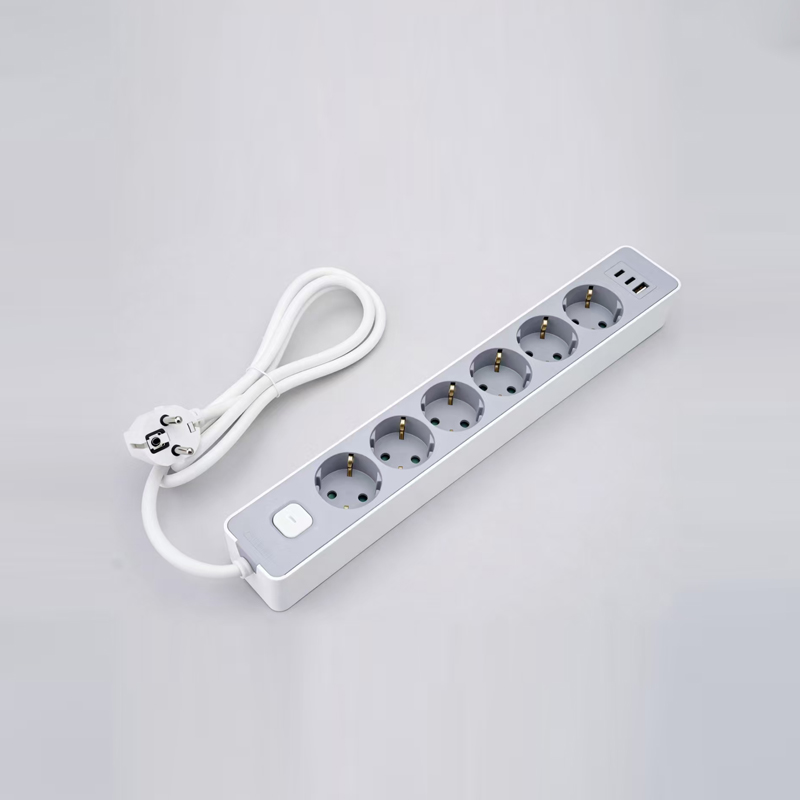
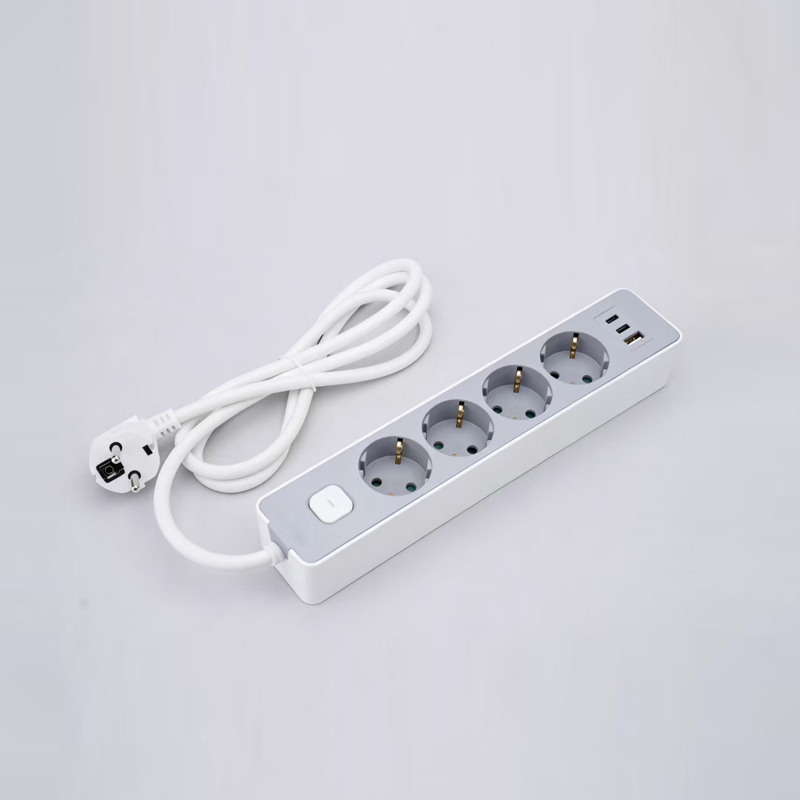
Choosing the right power strip comes down to matching the product's wattage rating, grounding, and plug configuration to your specific devices, not just buying the cheapest adapter available. Follow this sequence for a safe purchase decision:
- Step 1 — Check device labels: look for "INPUT: 100-240V, 50/60Hz" to confirm dual-voltage compatibility before assuming a plug adapter is sufficient.
- Step 2 — Match the grounding type: if your devices use a three-pin grounded plug, choose a strip built for Type F or Type E rather than an ungrounded Type C-only adapter.
- Step 3 — Check the amperage rating: sockets used in large parts of continental Europe are commonly rated for 16A at 230V, so confirm your power strip's rated current matches or exceeds your combined device load.
- Step 4 — Avoid daisy-chaining high-wattage appliances: reserve heat-producing tools for devices explicitly rated for the destination voltage, or use the appliance already provided at your accommodation.
- Step 5 — Confirm certification: using the correct locally approved plugs and cables may be mandatory, and adding an adapter after shipping might void product approvals, so it is often best to use region-specific cords or certified adapters.
Frequently Asked Questions
Can I plug a European power strip directly into a US outlet without any adapter?
No. The physical pin shapes are incompatible, and even if you forced a connection, the voltage difference between 120V in the US and 230V across most of Europe means a European-made strip would not be receiving the voltage it was designed for, risking poor performance or device damage.
Will a plug adapter alone protect my hair dryer in Europe?
No. a simple plug adapter will not protect a single-voltage hair dryer, since it will overheat, melt, and likely catch fire when used with only a plug adapter in Europe. You need either a dual-voltage appliance or a converter rated for the appliance's full wattage.
Are laptop and phone chargers generally safe to use with just a plug adapter?
Yes, in most cases. most modern electronics like laptops, phones, tablets, and cameras are dual-voltage, meaning if your device is dual-voltage you do not need a voltage converter, only a simple plug adapter. Always confirm by checking the input label first.
Do all European countries use the same plug type?
No. while Type C fits into Type E and Type F outlets, the reverse is not always true, and the UK, Ireland, and Malta use the distinct Type G plug instead of the continental round-pin styles. A universal power strip with multiple plug inputs is the safest choice for multi-country travel.
What's the real difference between a plug adapter and a voltage converter?
A plug adapter only changes the shape of the plug's prongs to fit the outlet and does not change the voltage, while a voltage converter is an electrical device that actually transforms the voltage from the wall down or up to match what the appliance needs. Confusing the two is the most common and costly mistake.
Final Takeaway
A European to US power strip solves the physical plug-shape problem, but it never solves the voltage problem on its own. the gap between US and European power systems goes beyond just the number of volts — plug shape, outlet design, frequency, and device compatibility all play a role. Before relying on any adapter or strip, check your device's voltage label, confirm the grounding and amperage match your appliance, and reserve true voltage converters for single-voltage, high-wattage tools. Getting this right is the difference between a convenient travel accessory and a fire hazard.
إذا كنت مهتمًا بمنتجاتنا، فيرجى الرجوع إلينا
- تفاصيل الاتصال
- Address : المنطقة الصناعية الشرقية Guanhaiwei، Cixi، Ningbo، 315314 Zhejiang، P.R.China.
- TEL:+86-15869536151 +86-0574-63666861 +86-0574-63666678
- Email:[email protected] [email protected]
- Fax:86-0574-63668558
- المنتجات
- قطاع الطاقة
- سلك التمديد
- بكرة الكابل
- محول
- المكونات
- رابط سريع
- Company Profile
- company culture
- Plant equipment
- FAQ
- مركز الأخبار
- أخبار الشركة
- أخبار الصناعة
- محطة الهاتف المحمول
-